The entrepreneurial world is saturated with a singular, powerful mantra: “Follow your passion, and the money will come.” This seductive philosophy has launched countless ventures, from artisanal bakeries to indie tech startups. Passion is the rocket fuel that ignites the entrepreneurial spirit, providing the relentless drive to work 80-hour weeks and persevere through early-stage adversity. However, a more insidious and rarely discussed narrative often unfolds behind the scenes—a scenario where passion, left unchecked, transforms from a driving force into a destructive one. This is the dangerous moment when passion begins to eat profit.
This phenomenon occurs when an entrepreneur’s emotional attachment to their product, service, or creative vision blinds them to commercial realities. It creates a cognitive bias where love for the craft overrides sound business judgment, leading to a cascade of decisions that systematically erode the company’s financial foundation. This article will dissect the anatomy of this silent business killer, explore its devastating consequences, and provide a strategic framework for harnessing passion’s energy while building a profitable, sustainable enterprise.
A. The Passion Paradox: How Love for Your Work Becomes a Liability
Passion is not inherently detrimental; it is the mismanagement of passion that creates risk. The very qualities that make passionate entrepreneurs compelling can become their greatest vulnerabilities.
A. The Visionary’s Blind Spot:
A passionate founder often has a crystal-clear vision of what they want to create. This vision, however, can become an unyielding dogma.
-
The Pitfall: The founder dismisses critical market feedback, negative customer reviews, or data that contradicts their original idea. They operate on the belief that “customers don’t know what they want yet,” leading to the development of products that are technologically brilliant or artistically pure but commercially unviable.
B. The Perfectionism Trap:
Driven by a deep love for their craft, passionate entrepreneurs can become obsessed with minute details that have negligible impact on the bottom line.
-
The Pitfall: Endlessly tweaking a product feature, redesigning a logo for the tenth time, or using prohibitively expensive materials for marginal aesthetic gains. This perfectionism delays launches, inflates costs, and drains resources that should be allocated to sales, marketing, and customer acquisition.
C. Emotional Pricing and Costing:
Passion projects are often priced based on the emotional value and sweat equity invested by the creator, not on market willingness to pay or a realistic cost-plus model.
-
The Pitfall: An artisan who prices their handcrafted furniture too low because they feel guilty charging for their “labor of love,” or conversely, prices it so high to justify its “uniqueness” that it alienates the target market. Both approaches strangle profitability.
D. The Inability to Pivot:
A pivot—a fundamental change in business strategy—is a common and often necessary step for startup survival. For a passionately attached founder, a pivot can feel like a personal failure or a betrayal of their core mission.
-
The Pitfall: The company continues to pour resources into a failing model because the founder’s identity is so intertwined with the initial idea, ultimately leading the business to crash instead of course-correct.

B. The Devastating Consequences: How Passion Erodes Your Business
When passion goes unmanaged, it manifests in tangible, business-crippling outcomes that extend far beyond vague notions of “burnout.”
A. Chronic Undercapitalization and Cash Flow Crises:
This is the most direct financial impact. Resources are misallocated from profit-generating activities to passion projects.
-
Example: A software startup spends its entire development budget on building an elegant, feature-rich application but has no capital left for a sales team or marketing campaign, resulting in a beautiful product with no users.
B. Team Dysfunction and Talent Drain:
Passionate founders can be inspiring leaders, but they can also be volatile and unreasonable taskmasters.
-
Example: The founder’s perfectionism demoralizes employees who feel their good work is never good enough. The founder’s unwavering vision silences dissenting voices, leading to a culture of “yes-men” and driving away pragmatic, talented employees who see the impending financial disaster.
C. Market Irrelevance:
While the founder is focused on perfecting their vision, the market moves on. Competitors who are more attuned to customer needs and cost-effective solutions capture market share.
-
Example: A local bookstore owner is so passionate about curating a collection of obscure literary fiction that they refuse to stock popular bestsellers or create a community space with a coffee bar, watching as customers flock to a larger chain or Amazon.
D. Founder Burnout and Identity Collapse:
When a business is an extension of one’s identity, its failures feel personal and its struggles are all-consuming.
-
Example: The founder, having invested their entire savings and sense of self into the business, experiences a psychological crisis when faced with financial insolvency. This is not just a business failing; it is a personal failure, leading to severe stress, depression, and a loss of the very passion that started the venture.
C. The Strategic Antidote: Building a Profit-First Framework
The goal is not to extinguish passion, but to channel it constructively. This requires building a disciplined business framework that acts as a container for passion, allowing it to fuel the enterprise without burning it down.
A. Implement Rigorous Financial Discipline:
Passion must be balanced with cold, hard data. The numbers are the reality check.
-
Actionable Steps:
-
Know Your Unit Economics: Precisely calculate your Customer Acquisition Cost (CAC) and Lifetime Value (LTV). A healthy business has an LTV that is at least 3x its CAC.
-
Establish Key Performance Indicators (KPIs): Move beyond vanity metrics (e.g., website visits) to actionable KPIs like conversion rate, monthly recurring revenue (MRR), and gross profit margin.
-
Mandate a “Pre-Mortem”: Before launching a new product or initiative, hold a meeting where the team assumes the project has failed one year from now and works backward to determine the most likely causes. This forces a realistic assessment of risks.
-
B. Separate Your Identity from Your Output:
The founder must learn to see the business as a separate entity that they serve, not as an extension of themselves.
-
Actionable Steps:
-
Create an Advisory Board: Appoint a board of experienced, objective advisors who are empowered to challenge your decisions and provide unvarnished feedback.
-
Practice “The Five Whys”: When you feel strongly about a decision (e.g., “We must use this specific material”), ask “why” five times. This drilling-down process often reveals whether the decision is driven by a sound business reason or an emotional attachment.
-
Develop a Hobby: Maintain an identity and source of joy completely outside of your business. This creates a psychological safety net and provides perspective.
-
C. Embrace the “Minimum Viable Product” (MVP) Mindset:
This concept from the lean startup methodology is the ultimate antidote to perfectionism.
-
Actionable Steps:
-
Launch Early, Then Iterate: Release a basic, functional version of your product to a small group of early adopters. Use their feedback to guide future development. This validates demand before massive resources are spent.
-
Apply the 80/20 Rule: Identify the 20% of effort that will deliver 80% of the value to the customer. Focus relentlessly on that 20% first.
-
D. Systematize and Delegate the “Passionless” Work:
A founder cannot be passionate about every aspect of the business. The key to scaling is to systemize operational functions.
-
Actionable Steps:
-
Document Standard Operating Procedures (SOPs): Create clear, step-by-step guides for repetitive tasks like accounting, inventory management, and customer onboarding.
-
Hire for Your Weaknesses: Deliberately hire key team members who complement your passion with pragmatism—a detail-oriented COO, a data-driven CFO, or a growth-focused CMO. Empower them to make decisions in their domains.
-
D. Case Studies: The Fine Line Between Passion and Profit
History provides clear examples of both the dangers and the mastered balance of passion.
A. The Cautionary Tale: Eastman Kodak
Kodak’s engineers actually invented the digital camera. However, the company’s passionate attachment to its legacy film business—its core identity and profit center for decades—made it unable to pivot. The emotional and institutional investment in the old model prevented them from embracing the new technology, leading to their eventual bankruptcy. Their passion for film literally ate the profit from digital.
B. The Masterful Balance: Apple under Steve Jobs
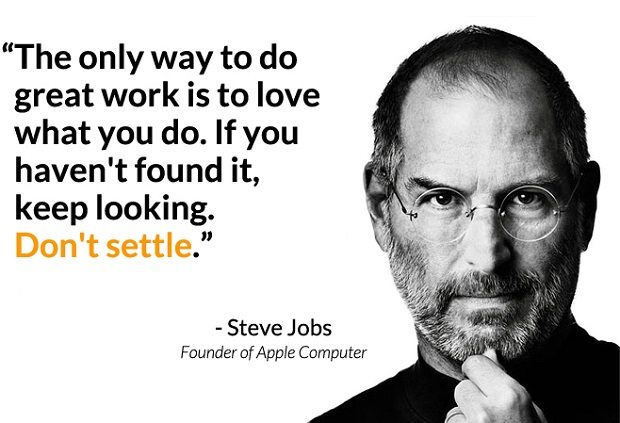
Steve Jobs was arguably one of the most passionate and visionary CEOs in history. His obsession with design and user experience was legendary. However, he balanced this with an uncompromising focus on profitability and market domination. He understood that to fulfill his passion for creating “insanely great” products, the company had to be ruthlessly efficient, control its supply chain, and build a powerful brand that commanded premium prices. His passion was the driver, but profit was the navigator.
E. The Psychological Shift: From Artist to Entrepreneur
The most critical transformation a founder must make is an internal one: shifting their self-concept from an “artist” or “craftsperson” to an “entrepreneur.”
A. The Artist’s Mindset:
-
Primary motivation: Self-expression.
-
Success metric: Critical acclaim, personal satisfaction.
-
Relationship to work: The work is an extension of the self.
B. The Entrepreneur’s Mindset:
-
Primary motivation: Solving a customer problem profitably.
-
Success metric: Sustainable revenue and customer satisfaction.
-
Relationship to work: The business is a vehicle for creating value.
The most successful founders learn to inhabit both mindsets, allowing their inner artist to inspire the vision and their inner entrepreneur to build the viable business around it.
Conclusion: Passion as the Engine, Not the Driver
Passion is the incredible energy source that can power a business through its most challenging phases. It inspires teams, creates a compelling brand story, and provides the resilience to overcome obstacles. However, unchecked passion is like a rocket engine without a guidance system—powerful, but destined to veer off course and explode.
The ultimate goal for every founder is to relegate passion to its proper role: the engine of the enterprise. It provides the thrust, but it must be guided by the cool, rational instruments of business strategy, financial discipline, and market feedback. By building a robust framework around your passion, you transform it from a volatile liability into your most powerful, sustainable asset. You learn to love what you do without letting that love destroy what you’ve built. In the end, the greatest act of passion is building a business that lasts.
Tags: entrepreneurship, business strategy, passion profit, startup failure, founder mindset, financial discipline, small business, business growth, entrepreneurial mindset, profit margin, small business management, business planning, startup advice, work life balance
Category: Business & Entrepreneurship