The Strategic Rationale Behind Corporate Downsizing
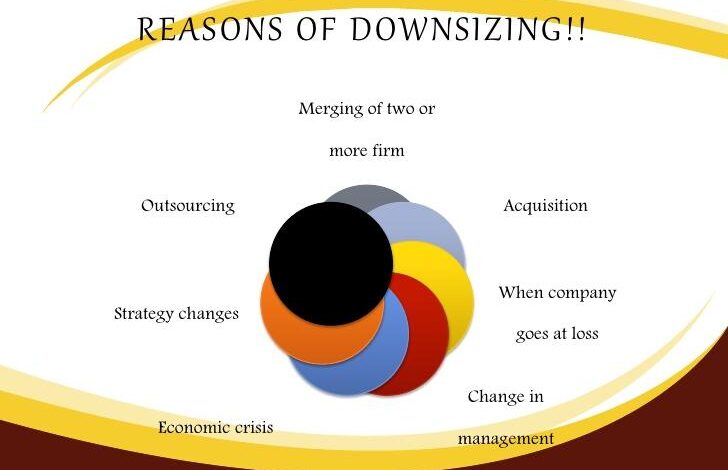
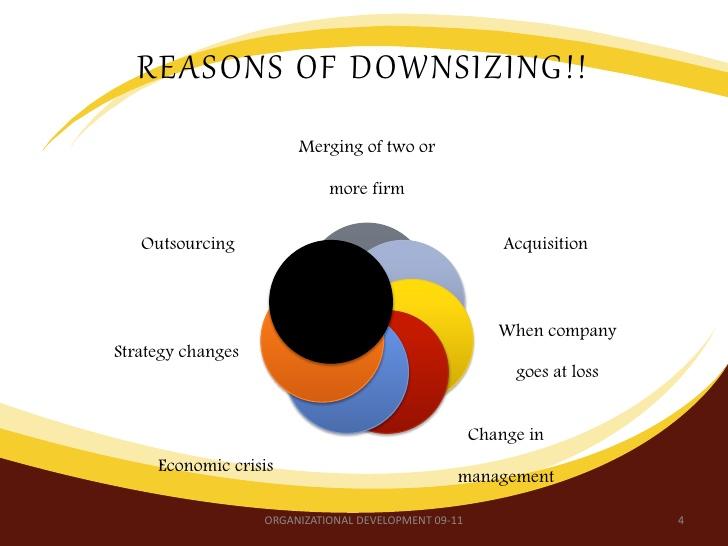
In recent times, the business landscape has been punctuated by a seemingly contradictory trend: even as markets in certain sectors show resilience, headlines are dominated by announcements of widespread layoffs and corporate “rightsizing.” From tech giants to legacy industrial firms, companies are consciously choosing to become smaller, leaner entities. To the casual observer, this may signal panic or failure. However, beneath the surface, this wave of downsizing is often a calculated, strategic maneuver driven by a complex interplay of economic pressures, technological disruptions, and profound shifts in corporate philosophy. This in-depth analysis moves beyond the headlines to unpack the critical reasons why companies are shrinking their workforces and operational footprints, revealing that what appears to be a retreat is often a strategic repositioning for future battles.
A. The Macroeconomic Squeeze: External Forces Compressing Corporations
The global economy is a powerful tide that lifts or grounds all ships. In the current climate, several macroeconomic currents are forcing companies to shed weight to stay afloat and navigate effectively.
A.1. The Pendulum Swing from Cheap Capital to Costly Debt
For over a decade, following the 2008 financial crisis, the world was awash in historically low interest rates and cheap capital. This environment encouraged aggressive expansion, moonshot projects, and a focus on user growth at all costs, particularly in the technology sector. Companies hired prolifically, anticipating that the era of easy money would continue indefinitely.
The paradigm has now decisively shifted. Central banks, in their battle against persistent inflation, have embarked on the most aggressive interest rate hiking cycle in a generation. This has two immediate effects:
-
Increased Cost of Capital: Borrowing money for expansion or even day-to-day operations has become significantly more expensive. This directly squeezes profit margins and forces companies to scrutinize every expense, with payroll being the largest.
-
Pressure from Investors: In a low-rate environment, investors rewarded growth. In a high-rate environment, they demand profitability and positive cash flow. To appease shareholders and maintain their stock valuations, companies are forced to demonstrate fiscal discipline, often through dramatic cost-cutting measures like layoffs.
A.2. The Looming Threat of Recession and Weakening Demand
While official recessions are defined by specific economic metrics, the fear of a downturn can be just as powerful. As inflation erodes consumer purchasing power and economic confidence wanes, companies across various sectors see a softening demand for their products and services.
-
Proactive Contraction: Many executives would rather reduce their workforce preemptively than be caught over-extended and be forced into a chaotic, reactive downsizing mid-crisis. This “get lean now” approach is seen as a responsible way to steer the company through potential economic turbulence.
-
Sector-Specific Vulnerabilities: Industries tied to discretionary spending—such as travel, luxury goods, and consumer tech—are often the first to feel the pinch. A decline in orders or subscriptions forces a rapid recalibration of staffing levels to match the new, lower revenue reality.
A.3. Geopolitical Instability and Supply Chain Re-evaluation
The post-Cold War era of smooth globalization has ended. The war in Ukraine, tensions between the U.S. and China, and persistent supply chain disruptions have created a world of heightened risk and uncertainty.
-
Strategic Decoupling: Companies that built intricate, globally dependent supply chains are now re-evaluating that model for national security and reliability reasons. This process of “de-risking” or “friend-shoring” often involves consolidating operations, which can lead to the closure of facilities in certain regions and the loss of associated jobs.
-
Increased Operational Costs: Higher shipping costs, tariffs, and the need for duplicate supply chains all contribute to rising operational expenses. To offset these new costs without dramatically raising prices for consumers, companies often look inward to find efficiencies, including workforce reduction.
B. The Technological Disruption: Automation and AI Replacing Human Labor
A long-term, structural force is simultaneously reshaping the corporate world: the rapid advancement of automation and artificial intelligence. This is not about cyclical economic patterns but a fundamental redefinition of roles and processes.
B.1. The Rise of Robotic Process Automation (RPA) and AI
Many routine, repetitive tasks that were once performed by human employees are now being efficiently and accurately handled by software and machines.
-
Administrative and Back-Office Functions: Roles in data entry, payroll processing, customer service (via chatbots), and basic accounting are highly susceptible to automation. Companies are investing in RPA software that can perform these tasks 24/7 without error, leading to a reduced need for large administrative teams.
-
AI-Powered Analytics and Decision-Making: AI algorithms can now analyze vast datasets to optimize marketing campaigns, manage inventory, and even assist in hiring decisions. This reduces the need for large teams of junior analysts, as the AI can provide insights faster and often more comprehensively.
B.2. The Strategic Pivot to a “Human-AI” Hybrid Workforce
Downsizing driven by technology is not always about pure elimination; it’s about restructuring. The vision for many forward-thinking companies is a leaner, more skilled workforce that leverages AI as a co-pilot.
-
Upskilling and Role Consolidation: A company may lay off 100 data processors but hire 20 AI specialists and data scientists. The goal is to have a smaller number of higher-value employees who can manage and interpret the output of automated systems.
-
Increased Productivity per Employee: By equipping a reduced workforce with powerful AI tools, a company can maintain or even increase its total output. This makes the organization more productive on a per-employee basis, a key metric watched closely by investors.
 C. The Strategic and Investor-Led Imperative for Leaner Operations
Beyond external pressures and technology, a fundamental shift in corporate strategy is underway. The mantra of “growth at all costs” is being replaced by “profitable, sustainable growth.”
C.1. The Investor-Led Demand for Profitability and Efficiency
The market’s patience for companies that burn cash indefinitely has worn thin. Venture capital and public markets are now demanding a clear and swift path to profitability.
-
The End of the “Hype” Cycle: For years, some companies could sustain massive losses based on the promise of future dominance. That model is no longer viable. Executives are now under intense pressure from their boards and major shareholders to show concrete financial results, leading to a focus on core, profitable business lines and the divestment or downsizing of peripheral, loss-making units.
-
Stock Buybacks and Dividend Pressures: A publicly traded company facing a stagnant or falling stock price may choose to use layoffs as a way to quickly free up cash. This cash is then often used to fund stock buybacks or increase dividends, which can immediately boost the stock price and please shareholders, even if it comes at the cost of long-term innovation capacity.
C.2. Post-Pandemic Operational Recalibration
The COVID-19 pandemic was a massive, unplanned experiment that forced rapid changes. Now, companies are analyzing what worked and making permanent adjustments.
-
The Over-Hiring of 2020-2022: During the pandemic, certain sectors, especially tech and e-commerce, experienced a massive demand surge. They hired aggressively to meet this demand. As the world normalized, demand patterns settled back to a more sustainable level, leaving these companies overstaffed relative to the new reality.
-
Embracing Remote Work and Flatter Structures: The widespread adoption of remote work has proven that many meetings and middle-management roles dedicated to oversight are less critical. Some companies are using this moment to “flatten” their organizational structure, eliminating layers of middle management and creating a more agile, direct reporting system, which inevitably leads to a smaller overall headcount.
C.3. Strategic Refocusing and “Return to Core”
In pursuit of growth, many companies diversified into unrelated areas. The current economic climate is forcing a ruthless prioritization.
-
Killing the “Moonshots”: Large tech companies, for instance, are shutting down experimental divisions (e.g., in VR, self-driving cars, or futuristic gadgets) that are far from profitability. They are refocusing their resources and talent on their core, money-making products.
-
Spinoffs and Divestitures: A large conglomerate might decide to spin off a underperforming division into a separate company. This act shrinks the parent company but is done to unlock value, as the market often values focused, pure-play companies more highly than complex conglomerates.

D. The Human and Societal Impact of the Downsizing Trend
While the strategic reasons are clear, the human cost and broader societal implications cannot be ignored and are becoming a critical part of the conversation.
D.1. The Erosion of Employee Loyalty and the “Gigification” of Work
The social contract between employer and employee, which promised job security in exchange for loyalty, has been severely damaged. Repeated rounds of layoffs have created a generation of workers who are inherently skeptical and prioritize their own skills and marketability over company allegiance. This fosters a rise in freelance and contract work, shifting risk from the corporation to the individual.
D.2. The Morale Crisis Among “Survivors”
Those who remain after a round of layoffs often face a “survivor’s guilt” syndrome. They are typically expected to take on the workload of their departed colleagues without a corresponding increase in pay, leading to burnout, decreased morale, and a drop in productivity—the very opposite of what the downsizing intended to achieve.
D.3. The Intensifying Scrutiny on Executive Leadership
The public and media are increasingly questioning the morality of mass layoffs that are announced concurrently with record profits and multi-million dollar executive compensation packages. This has led to a backlash that can damage a company’s brand and make it harder to attract top talent in the future.
Conclusion: Navigating the New Corporate Compact
The trend of corporate downsizing is a multifaceted phenomenon, far more complex than a simple reaction to a slowing economy. It is the result of a powerful convergence of harsh macroeconomic realities, relentless technological advancement, and a fundamental strategic pivot towards efficiency and profitability. Companies are not just shrinking; they are metabolizing, shedding what they perceive as non-essential mass to become more agile, automated, and focused entities.
The challenge for the modern corporation is to execute this lean strategy without breaking the trust of its remaining employees, its customers, and society at large. The most successful companies of the future will be those that find a balance—leveraging technology and strategic focus to drive profits, while also investing in their human capital, fostering a culture of resilience, and rebuilding a compact of mutual respect with their workforce. In this new era, sustainable success will depend not just on how efficiently a company can shrink, but on how wisely it chooses to grow thereafter.
Category: Business
Tags: corporate downsizing, layoffs, business strategy, economic trends, restructuring, operational efficiency, automation, AI, recession, cost-cutting, profitability, talent management, corporate restructuring, market adaptation