
The Next Trillion-Dollar Business Sectors Unveiled
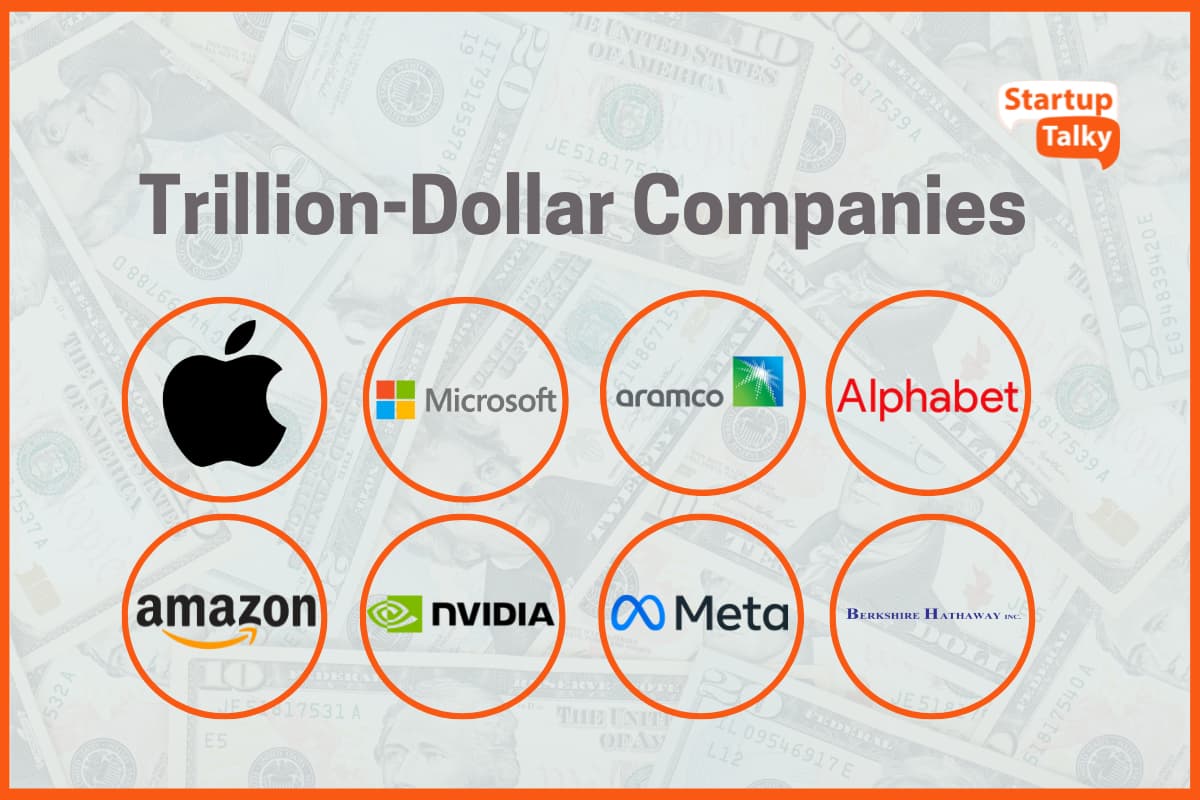
The pursuit of a trillion-dollar valuation is the modern-day space race of the corporate world. For context, a trillion dollars is a one followed by twelve zeros; it is an economic gravity well so powerful that it can reshape global markets, redirect national priorities, and redefine human capability. While today’s giants—Apple, Microsoft, Saudi Aramco—have breached this celestial ceiling, they emerged from seeds planted decades ago in personal computing and fossil fuels. The critical question for investors, entrepreneurs, and policymakers is no longer who will reach this milestone next, but which emerging sectors possess the foundational potential to birth multiple trillion-dollar entities. This deep dive explores the frontiers of technology and science that are not merely growing, but are poised to create entirely new economies, fundamentally altering our world and birthing the next generation of corporate titans.
A. The Cognitive Revolution: Artificial Intelligence as the Ultimate Utility
Artificial Intelligence has moved beyond a buzzword to become the defining technological paradigm of our age. Its path to a multi-trillion-dollar valuation is not as a single product, but as a pervasive, utility-like layer embedded in every facet of the global economy.
A.1. The Foundational Layer: AI Infrastructure and Platforms
Before AI can deliver value, it must be built and deployed. This creates a monumental opportunity in the foundational layer.
-
Semiconductor Supremacy: The insatiable demand for specialized processing power is fueling a golden age for chip designers and manufacturers. Companies like NVIDIA have demonstrated this, but the race is far from over. The next phase involves chips specifically designed for AI workloads at the edge—in your phone, your car, your home appliances—creating a market far larger than data centers alone.
-
Cloud AI Platforms: The battle among hyperscalers (Amazon Web Services, Google Cloud, Microsoft Azure) is shifting from raw storage and compute to offering the most robust, developer-friendly AI and machine learning tools. The platform that becomes the standard for building and deploying enterprise AI will capture immense, recurring value.
-
Data Aggregation and Curation: AI models are hungry for vast, clean, and well-labeled datasets. Companies that can ethically source, anonymize, and structure niche data (e.g., medical imaging, autonomous driving scenarios, financial fraud patterns) will become the “oil refiners” of the AI economy, enabling specialized model training.
A.2. The Application Layer: Industry-Specific AI Disruption
This is where the majority of value creation will occur, as AI solves costly, complex problems across all verticals.
-
Precision Medicine and Drug Discovery: AI can analyze genetic data, medical literature, and clinical trial results at a scale impossible for humans. This accelerates drug discovery from a decade-long, billion-dollar process to one that is faster, cheaper, and more likely to succeed. AI-powered diagnostic tools can detect diseases like cancer from scans with superhuman accuracy.
-
Autonomous Systems and Robotics: The vision extends beyond self-driving cars to include autonomous freight trucks, warehouse robots, and agricultural drones. This will revolutionize logistics, supply chains, and food production, generating trillions in efficiency gains and new business models.
-
Hyper-Personalized Education and Talent Development: AI tutors can provide customized learning paths for every student, while corporate training platforms can reskill workforces in real-time for the demands of the AI-augmented economy. This addresses a critical global need and represents a massive market.
A.3. The Economic and Ethical Quandaries
The rise of AI is not without its perils, which themselves will create new industries focused on mitigation.
-
The Job Displacement Tsunami: While AI will create new roles, it will render many obsolete. This will spur a trillion-dollar opportunity in workforce transition services, reskilling platforms, and potentially new forms of social safety nets and economic models, such as universal basic income (UBI) pilots.
-
AI Safety, Security, and Ethics: As AI systems become more powerful, ensuring they are aligned with human values, secure from malicious use, and free from bias is paramount. This will create a massive new field for “AI auditors,” security firms specializing in AI, and developers of ethical AI frameworks.
B. The Biological Frontier: Biotechnology and the Conquest of Disease
We are transitioning from treating diseases to potentially eliminating them. Biotechnology is evolving from a healthcare subset into a fundamental engineering discipline applied to life itself.
B.1. Gene Editing and Curative Therapies
The advent of CRISPR-Cas9 and subsequent gene-editing technologies has given us the literal source code of life.
-
The End of Genetic Disorders: Diseases like sickle cell anemia, Huntington’s, and cystic fibrosis, once considered lifelong sentences, are now viable targets for permanent cures. The companies that successfully develop and commercialize these one-time, curative therapies will create unprecedented value, effectively selling a “cure” rather than a “treatment.”
-
CAR-T and Personalized Oncology: The field of immuno-oncology, where a patient’s own immune cells are engineered to hunt and destroy cancer cells, is still in its infancy. The next wave involves “off-the-shelf” therapies and targeting solid tumors, opening a path to treating the world’s second-leading cause of death.
B.2. The Longevity and Anti-Aging Economy
A new, audacious goal is emerging: not just to extend lifespan, but to extend “healthspan”—the period of life spent in good health.
-
Cellular Senescence and Rejuvenation: Research into clearing senescent “zombie” cells (senolytics) and understanding the epigenetic drivers of aging is advancing rapidly. Companies that can develop proven, safe interventions to slow or reverse aspects of the aging process will tap into a market that is, by definition, universal.
-
Preventive Genomics and Personalized Health Monitoring: The combination of affordable genetic sequencing and AI analytics will allow individuals to understand their unique disease risks and take proactive, personalized measures to maintain health. This shifts the economic model from sick-care to true health-care.
B.3. Synthetic Biology and Bio-Manufacturing
This involves reprogramming biological systems (like yeast, bacteria, and algae) to produce everything we need sustainably.
-
Sustainable Production: From lab-grown meat and precision-fermented proteins to biofuels and bio-degradable plastics, synthetic biology offers a path to decouple human consumption from environmental degradation. This sector will directly compete with and disrupt incumbent agriculture, energy, and materials industries.
-
Space Biomanufacturing: For long-duration space missions or Martian colonies, synthetic biology will be essential for producing medicine, food, and materials on-demand, using local resources.

C. The Sustainable Transition: The Green Energy and Circular Economy
The imperative to combat climate change is the greatest forced market transition in human history. This is not just an environmental goal; it is the largest capital reallocation event of the 21st century.
C.1. The Energy Generation Triad
The race is on to dominate the future of energy production.
-
Next-Generation Solar and Wind: Efficiency gains and cost reductions continue, but the next leap will come from novel materials like perovskites for solar cells and floating offshore wind turbines that access stronger, more consistent winds.
-
Green Hydrogen: Produced using renewable energy to split water, green hydrogen is a clean-burning fuel and a critical industrial feedstock. It is seen as the missing link for decarbonizing heavy industry, shipping, and aviation—sectors where batteries are impractical.
-
Nuclear Fusion: While a long-term bet, the recent scientific breakthroughs in achieving net energy gain bring the prospect of limitless, safe, zero-carbon power closer to reality. A commercially viable fusion reactor would be the ultimate trillion-dollar asset.
C.2. Energy Storage and Grid Modernization
Intermittent renewable sources require a revolution in how we store and manage energy.
-
Beyond Lithium-Ion: The search is on for cheaper, safer, and more abundant battery chemistries—sodium-ion, solid-state, iron-air, and flow batteries. The winner of this race will power everything from grids to electric vehicles.
-
Grid Digitization and AI Optimization: The future grid must be smart, resilient, and bidirectional. This requires a massive investment in sensors, software, and AI to balance supply and demand in real-time, integrating millions of distributed energy resources like rooftop solar and EV batteries.
C.3. Carbon Capture, Utilization, and Storage (CCUS)
Even with a rapid transition to renewables, we have already emitted too much CO2. CCUS technology is moving from a niche concept to a necessity.
-
Direct Air Capture (DAC): Technologies that actively pull CO2 directly from the atmosphere will become a massive industry, creating a market for “negative emissions” that corporations and governments will pay for to meet climate targets.
-
Carbon Utilization: The captured carbon can be turned into valuable products, from carbon-neutral synthetic fuels and chemicals to building materials like concrete, creating a circular carbon economy.
D. The Final Frontier: The Commercial Space Economy
Space is ceasing to be the domain of governments and is becoming a new arena for commerce and industry.
D.1. Low Earth Orbit (LEO) Economy and Satellite Megaconstellations
The immediate opportunity lies in the orbit closest to Earth.
-
Global Broadband and IoT: Projects like Starlink and OneWeb are building vast networks of satellites to provide high-speed internet globally. This will connect the unconnected and enable a true Internet of Things (IoT) for agriculture, shipping, and environmental monitoring.
-
Space Manufacturing and Research: The microgravity environment of space offers unique conditions for producing higher-quality pharmaceuticals, purer fiber optics, and novel alloys. Factories in space, once science fiction, are becoming a viable business plan.
D.2. Space Resource Utilization and In-Situ Resource Utilization (ISRU)
The true long-term value lies in using the resources of space to explore and develop space itself.
-
Asteroid and Lunar Mining: The Moon and near-Earth asteroids contain vast quantities of water ice (which can be split into hydrogen and oxygen for rocket fuel) and precious metals like platinum. The first company to successfully mine and return these resources will fundamentally alter the economics of spaceflight, creating a gas station and hardware store in orbit.
-
The Pathway to Mars and Beyond: ISRU is the enabling technology for a sustained human presence on Mars. By “living off the land,” the cost and complexity of missions drop dramatically, opening the solar system to exploration and settlement.
E. The Quantum Leap: Quantum Computing and a New Class of Problems
Quantum computing leverages the strange laws of quantum mechanics to process information in ways fundamentally different from classical computers.
E.1. The Hardware and Access Model
The race to build a stable, error-corrected, large-scale quantum computer is a monumental engineering challenge. The companies that succeed in building the hardware will offer computational power via the cloud, much like supercomputers are used today, creating a “Quantum-as-a-Service” (QaaS) industry.
E.2. The Transformative Applications
Quantum computers will not replace your laptop, but they will solve specific, previously intractable problems.
-
Materials Science and Drug Discovery: They can precisely simulate molecular interactions, allowing for the design of new materials (e.g., high-temperature superconductors, more efficient catalysts) and drugs from first principles.
-
Cryptography and Financial Modeling: They will break current encryption standards, spurring a trillion-dollar transition to quantum-resistant cryptography. They will also optimize complex financial portfolios and risk models with unparalleled speed.
Conclusion: The Convergence That Will Define Our Future
The most profound insight is that these trillion-dollar sectors are not developing in isolation. They are converging, creating a synergistic flywheel of innovation. AI is essential for analyzing genomic data in biotech and optimizing smart energy grids. Quantum computing could turbocharge the discovery of new materials for both fusion reactors and advanced batteries. Biotechnology may be needed to sustain human health on long-duration space missions.
The next trillion-dollar companies will not be masters of a single domain but will sit at the nexus of these convergences. They will be the entities that can harness AI to design life-saving drugs, leverage quantum-powered simulations to create new sustainable materials, and deploy satellite networks to manage a global clean energy grid. The race is already underway, and its winners will not just be rich; they will be the architects of the 21st century and beyond.
Category: Technology
Tags: trillion-dollar companies, future industries, AI economy, quantum computing, clean energy, biotechnology, fintech revolution, space economy, sustainable technology, emerging markets, tech investing, innovation, graphene, CRISPR, carbon capture