
Industries That Defy Automation Completely
In an era dominated by headlines about artificial intelligence and robotics transforming every facet of our lives, a pervasive fear has taken root: the fear of mass technological unemployment. We are told that drivers, cashiers, and data analysts will soon be replaced by algorithms and machines. While it is undeniable that automation will disrupt countless routine tasks, this narrative overlooks a profound and reassuring truth. There exists a vast and critical segment of the economy that is, by its very nature, fundamentally immune to full automation. This comprehensive analysis delves into the human-centric industries and roles where the quintessential qualities of human consciousness—empathy, creativity, strategic intuition, and nuanced physical dexterity—create an insurmountable barrier for even the most advanced technology. These are the fields not just surviving the age of AI, but thriving because of it, as they leverage technology as a tool to augment irreplaceably human skills.
A. The Uniquely Human Arsenal: Skills Beyond Code and Circuits
To understand why certain industries are automation-proof, we must first identify the specific human capabilities that remain, for now and the foreseeable future, beyond the reach of silicon and code.
A.1. Deep Emotional Intelligence and Empathetic Connection
Machines can analyze speech patterns to detect sentiment and generate scripted responses. However, they cannot genuinely feel or understand human emotion in a contextual, embodied way.
-
Genuine Empathy vs. Simulated Response: True empathy involves shared experience, mirroring another’s emotional state, and offering comfort born of a deep understanding of the human condition. A robot can be programmed to say, “I understand your pain,” but it cannot sit with you in silence, hold your hand, or draw upon its own life experiences to provide authentic solace. This genuine connection is the bedrock of trust in fields like therapy, hospice care, and social work.
-
Contextual and Cultural Nuance: Human emotions are not isolated data points; they are woven into a complex tapestry of cultural norms, personal history, and situational context. A human can understand the subtle difference between righteous anger and frustrated despair, and respond appropriately—a nuance that is lost on even the most sophisticated language model.
A.2. Creative Synthesis and Original Artistic Expression
AI excels at pattern recognition and recombination. It can analyze millions of paintings, musical compositions, or architectural designs and generate new works that are derivative of its training data.
-
The Spark of Original Inspiration: True creativity, however, often springs from a place of subconscious connection, personal suffering, joy, or a desire to comment on the human experience. It involves breaking established patterns, not just replicating them. The ability to paint a masterpiece that challenges societal norms, compose a symphony that evokes a previously unfelt emotion, or write a novel with a deeply unreliable narrator requires a consciousness that is aware of its own existence and its place in the world.
-
Strategic and Conceptual Innovation: Beyond art, this applies to business strategy and scientific discovery. An AI can optimize an existing business model, but it cannot conceive of a disruptive new business model like Airbnb or Uber. It can process scientific data, but the leap of intuition required to form a new scientific hypothesis, like Einstein’s theory of relativity, is a profoundly human act.
A.3. Complex and Unstructured Problem-Solving
While AI can solve predefined problems with incredible speed, it struggles with novel, messy, real-world situations where the parameters are constantly shifting and the data is incomplete.
-
The “Unknown Unknowns”: A human plumber can enter a home, hear a description of a problem, and then use a combination of experience, intuition, and sensory perception (sight, sound, touch) to diagnose an issue they have never encountered before. They adapt their tools and techniques on the fly. An automated system, in contrast, is limited to diagnosing problems it has been explicitly programmed to recognize.
-
Integrating Multiple Disciplines: Solving the world’s most complex problems—like climate change or geopolitical conflicts—requires integrating knowledge from economics, sociology, political science, and environmental science, and then making value judgments. This holistic, cross-disciplinary synthesis is a uniquely human strength.
A.4. Nuanced Physical Dexterity and Environmental Adaptation
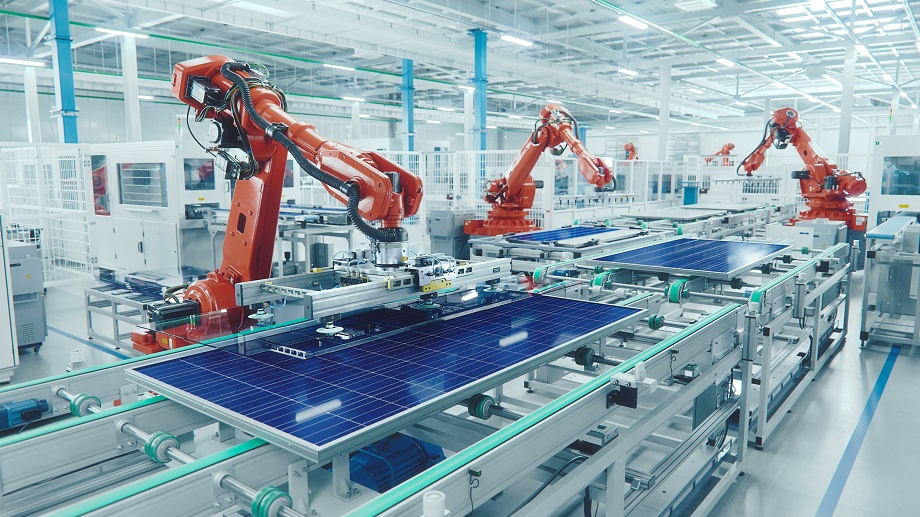
Robotics has made stunning advances in controlled environments like assembly lines. However, the unpredictable nature of the real world presents immense challenges.
-
The Unstructured World: Consider the task of a home health aide. They must navigate cluttered homes, help a fragile person out of bed, bathe them without causing injury, and prepare a meal—all tasks requiring a gentle touch, spatial awareness, and the ability to adapt to a constantly changing physical environment. This is orders of magnitude more complex than a robot arm welding a car chassis.
-
Fine Motor Skills with Feedback: A surgeon performing a delicate operation relies not just on visual input but on haptic feedback—the subtle sensation of tissue resistance through their instruments. This tactile feedback loop, essential for knowing how much pressure to apply, is incredibly difficult to replicate in machines.
B. The Automation-Proof Industries: A Detailed Examination
These uniquely human skills converge in several key industries, creating a durable moat against automation.
B.1. Healthcare and the Healing Arts
The practice of medicine is as much an art as it is a science. While AI will become a powerful diagnostic aid, the core of patient care will remain a human domain.
-
Medical Diagnosis and Treatment Planning: AI can scan medical images and suggest possible diagnoses, but the final responsibility lies with a human doctor who integrates the AI’s analysis with their clinical experience, a physical examination, and a conversation with the patient. A diagnosis often involves interpreting subtle cues—a patient’s body language, their tone of voice, their social circumstances—that a machine cannot fully comprehend.
-
Nursing and Patient Care: The role of a nurse involves empathy, compassion, and emotional support during times of fear and vulnerability. It requires building rapport, motivating patients, and providing comfort. These are not tasks that can be coded.
-
Mental Health Therapy and Psychiatry: The therapeutic alliance—the bond of trust between therapist and client—is the single most important factor in successful outcomes. This relationship is built on genuine human empathy, unconditional positive regard, and the therapist’s own lived experience, all of which are impossible to automate.
B.2. Education and Human Development
Teaching is not merely the transmission of information; it is the ignition of curiosity and the cultivation of character.
-
Personalized Inspiration and Mentorship: A great teacher can spot a student’s hidden potential, spark a passion for a subject, and provide mentorship that shapes a young person’s life. They adapt their teaching style in real-time based on the “energy” of the classroom. This dynamic, inspirational role is beyond the capability of even the most sophisticated educational software.
-
Teaching Social-Emotional Skills: Educators play a crucial role in teaching children how to collaborate, resolve conflicts, show empathy, and develop resilience. These skills are learned through social interaction and guided practice with a caring adult, not by interacting with a screen.
B.3. The Skilled Trades and Hands-On Craftsmanship
The physical world is infinitely variable, and the skilled trades are a testament to the human ability to master it.
-
Complex Repair and Maintenance: Electricians, HVAC technicians, and automotive mechanics diagnose and fix problems in complex, aging systems where no two jobs are exactly alike. This requires a deep theoretical understanding combined with hands-on experience and problem-solving intuition.
-
High-End Craftsmanship and Artisan Work: From custom carpentry and masonry to bespoke tailoring and gourmet cooking, these fields are defined by a human touch. The value lies in the artisan’s unique style, their ability to work with natural materials that have variations, and their commitment to quality that transcends mass production.
B.4. Strategic Leadership and Executive Management
While AI can provide powerful data analytics for business decisions, the core of leadership is inherently human.
-
Cultivating Company Culture: A leader must inspire a shared vision, motivate a diverse team, navigate office politics, and foster a culture of innovation and trust. This requires high emotional intelligence and the ability to make value-based judgments that align with the company’s long-term mission.
-
Negotiation and Stakeholder Management: High-stakes negotiations involve reading the room, understanding unspoken motivations, building rapport, and finding creative win-win solutions. These are subtle, dynamic human interactions that cannot be reduced to an algorithm.
B.5. The Creative and Legal Professions
-
Legal Strategy and Courtroom Advocacy: While AI can review documents for discovery, it cannot craft a persuasive legal argument, cross-examine a witness, or appeal to the empathy of a jury. The law is a system built on human values, precedent, and interpretation, requiring human judgment.
-
Scientific Research and Development: AI can process data, but the creative leap of forming a new hypothesis and designing experiments to test it is a deeply human endeavor driven by curiosity and intuition.
C. The Future Symbiosis: Human and Machine Collaboration
The future of work in these fields is not human versus machine, but human with machine. The most successful professionals will be those who leverage AI as a powerful tool to augment their uniquely human skills.
C.1. The Augmented Doctor
A surgeon uses a robotic system that enhances precision and minimizes tremors, but the surgeon’s knowledge, experience, and judgment guide every cut.
C.2. The Empowered Teacher
An educator uses an AI platform to track student progress and identify learning gaps, freeing up their time to provide one-on-one mentorship and lead engaging classroom discussions.
C.3. The Insightful Leader
A CEO uses AI-driven market analytics to inform their strategy, but they rely on their own vision, ethics, and understanding of human nature to make the final, courageous decision.
Conclusion: The Enduring Value of Humanity
The march of automation is not an apocalypse for human labor; it is a clarion call for a great reassessment. It forces us to recognize and value the deeply human capabilities that we have often taken for granted. The industries that defy automation are the very ones that sustain our society, our well-being, our culture, and our spirit. They remind us that the ultimate value does not lie in flawless efficiency, but in compassionate care, in inspired teaching, in beautiful craftsmanship, and in wise leadership. As technology automates the predictable, our focus will shift to the work that is profoundly human: the work of connecting, creating, caring, and inspiring. In this future, our humanity is not our liability; it is our greatest and most durable asset.
Category: Technology
Tags: automation, future of work, artificial intelligence, human skills, creative industries, healthcare, education, skilled trades, emotional intelligence, complex problem solving, AI limitations, job security, career advice, technology trends