![2024] Top 8 TikTok Competitors and Alternatives](https://business.patinews.com/wp-content/uploads/2025/10/tiktok-image-780x470.png)
![2024] Top 8 TikTok Competitors and Alternatives](https://business.patinews.com/wp-content/uploads/2025/10/tiktok-image.png)
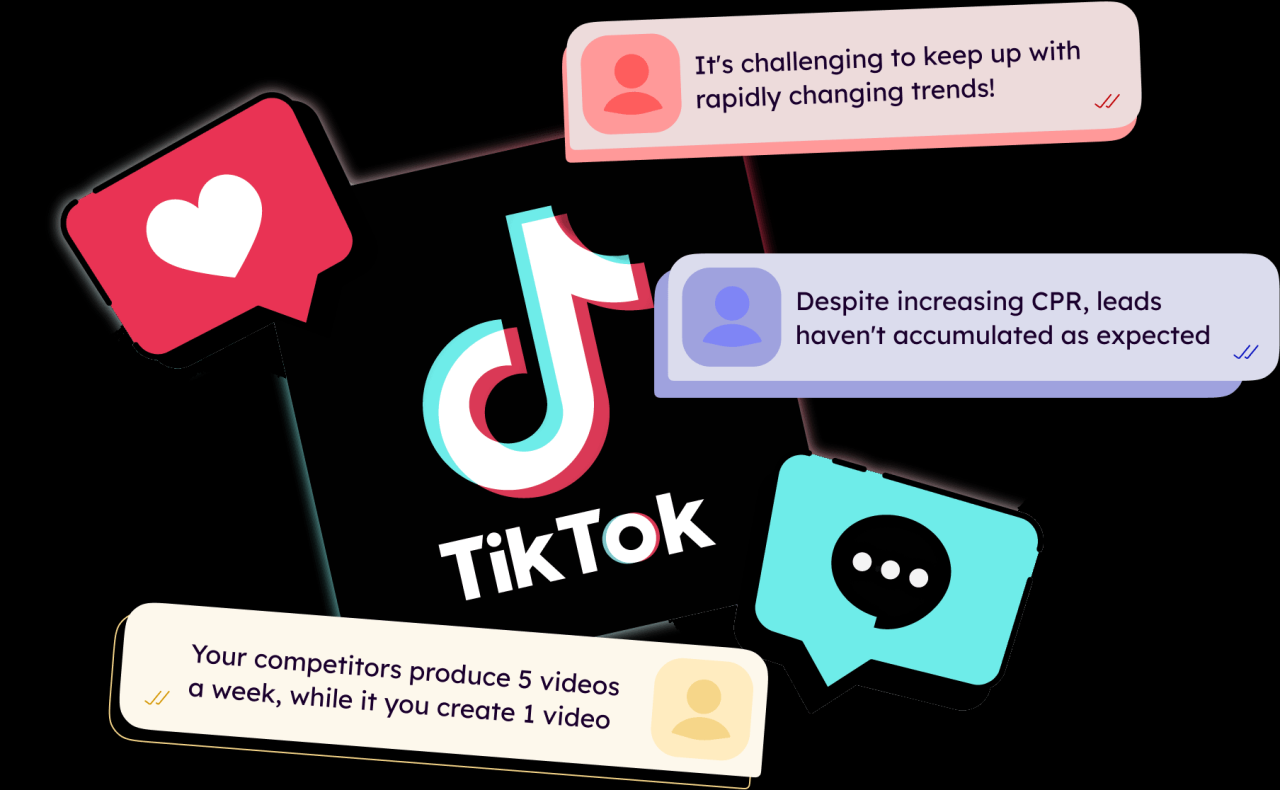
For decades, competitive analysis was a relatively straightforward exercise. A business would identify its direct competitors—those offering similar products or services to the same target market—and its indirect competitors—those satisfying the same customer need in a different way. The playbook was clear. However, the digital age has unleashed a new, formidable, and often misunderstood competitor that doesn’t fit into traditional frameworks. For a vast and growing number of industries, your new competitor is TikTok.
This statement is not merely about a social media platform competing for advertising dollars. It signifies a fundamental shift in the battlefield. TikTok is no longer just an app for viral dances and short-form entertainment; it has evolved into a dominant force competing for the most precious and finite resources of the modern economy: consumer attention, time, and disposable income. This article will deconstruct how TikTok operates as a multifaceted competitor, analyze its disruptive impact across key sectors, and provide a strategic survival guide for businesses navigating this new reality.
A. Deconstructing the Disruption: How TikTok Competes
TikTok’s competitive threat is not monolithic; it is a multi-pronged assault on the very pillars of traditional business. It competes in ways that most established companies are ill-prepared to counter.
A. The Battle for Attention and Time: The Ultimate Currency
In an attention economy, the winner is the entity that can capture and hold user engagement. TikTok’s algorithm is arguably the most sophisticated and addictive attention-capture machine ever created.
-
The Mechanism: Its “For You Page” (FYP) delivers a perfectly personalized, endless stream of content, creating a state of “flow” where users lose track of time. The platform’s short-form, full-screen, auto-playing videos are designed for maximum immersion.
-
The Competitive Impact: Every minute a user spends on TikTok is a minute not spent browsing your e-commerce site, reading your blog, watching your YouTube channel, or engaging with your brand on other platforms. It directly reduces the opportunity window for your marketing messages to land.
B. The Disruption of Traditional Marketing Funnels
TikTok has fundamentally rewired consumer discovery and decision-making.
-
The Mechanism: Traditional funnels are linear: Awareness -> Consideration -> Conversion. TikTok creates a “discovery-to-purchase” vortex. A user can be unaware of a product, see it in a viral video, click a link, and complete a purchase within 60 seconds, all without ever leaving the app.
-
The Competitive Impact: Your meticulously crafted brand story and multi-touch marketing campaigns are competing with raw, authentic, and instantly compelling 30-second videos. TikTok has conditioned consumers to expect immediate gratification and discovery, making slower, more traditional branding efforts feel outdated.
C. The Rise of the Algorithmic Competitor
You are no longer just competing with other businesses; you are competing with TikTok’s algorithm itself.
-
The Mechanism: The algorithm is an agnostic curator of engagement. It does not favor your branded content over a creator’s funny skit or a random user’s pet video. It promotes whatever keeps users on the platform longest. To win, your content must be as entertaining, authentic, and engaging as any other video on the FYP.
-
The Competitive Impact: This forces businesses to compete on entertainment value, not just product features. The marketing department must now think like a media company, prioritizing virality and shareability alongside traditional sales messages.
D. The Re-definition of Influence and Authority
TikTok has democratized influence, shifting power away from traditional celebrities and established experts.
-
The Mechanism: “Micro-influencers” and nano-influencers, who may have small but highly engaged followings in specific niches, can drive massive purchasing decisions. A single video from a 19-year-old skincare enthusiast can have more sales impact than a glossy magazine ad.
-
The Competitive Impact: Your brand’s authority, built over years, is now challenged by the perceived authenticity of a stranger on the internet. Trust is now earned through peer validation on TikTok, not just through corporate messaging.

B. Sector-Specific Impact: Industries Under Siege
TikTok’s competitive reach is vast, but its impact is particularly acute in the following sectors.
A. E-commerce and Retail: The “TikTok Made Me Buy It” Phenomenon
TikTok Shop has formalized the platform’s role as a direct sales channel, but the impact runs deeper.
-
Case Study: A small bookshop can be inundated with requests for a book featured in a single viral video (#BookTok). A fashion brand can see a product sell out globally overnight due to a styling tip from a creator (#FashionTok). The platform creates unpredictable, explosive demand that can overwhelm supply chains and make long-term inventory planning nearly impossible.
-
The Challenge: Traditional retailers relying on SEO, email marketing, and predictable seasonal trends are being blindsided by these algorithmic spikes.
B. Media and Entertainment: The Attention War
TikTok is a direct competitor to streaming services, news outlets, and video games.
-
Case Study: Why would a user watch a 2-hour movie on Netflix when they can get a condensed, entertaining summary on “MovieTok” in 60 seconds? Why read a long-form restaurant review when a “FoodTok” video shows the entire experience? The platform provides snackable summaries and entertainment hits that threaten the consumption of long-form content.
-
The Challenge: Media companies are not just competing with each other; they are competing with the distilled, hyper-engaging version of their own content on TikTok.
C. Education and Learning: The “Edu-Tainment” Revolution
From language learning to complex scientific concepts, TikTok is a burgeoning learning platform.
-
Case Study: A chemistry teacher on TikTok can explain a complex reaction with quick, visual, and memorable videos. This challenges traditional online course platforms and even formal education, which often move at a slower, less engaging pace.
-
The Challenge: Educational institutions and e-learning companies must now make their content as digestible and entertaining as the best “EduTok” creators to capture the attention of younger generations.
D. Search Engines: The New Discovery Engine
Gen Z is increasingly using TikTok as a search engine.
-
Case Study: Instead of Googling “best hiking trails near Seattle,” a user will search the same phrase on TikTok to get video results showing real people on those trails, providing a visceral, authentic perspective that text-based Google results cannot match.
-
The Challenge: This threatens the foundational model of traditional search engine optimization (SEO). Businesses must now optimize for “TikTok SEO,” creating video content that answers user queries in a visually compelling way.
C. The Strategic Survival Guide: Competing in the TikTok Era
Businesses cannot ignore this shift. The strategy is not necessarily to be on TikTok, but to understand and adapt to the consumer behaviors it has created.
A. Adopt a “Video-First” Mindset Across All Channels
The expectation for short, engaging video is no longer confined to TikTok.
-
Actionable Steps:
-
Repurpose successful TikTok-style videos for Instagram Reels and YouTube Shorts.
-
Incorporate authentic, behind-the-scenes video content into your website and email marketing.
-
Train your team to communicate via quick, informative Loom videos instead of long emails.
-
B. Embrace Authenticity Over Polished Perfection
The TikTok aesthetic favors raw, relatable content. Over-produced, corporate-style ads often fail on the platform.
-
Actionable Steps:
-
Empower employees to become brand ambassadors, creating content that showcases the human side of your business.
-
Show your mistakes and processes, not just your finished, perfect products. This builds trust and relatability.
-
Leverage user-generated content (UGC) heavily; it is perceived as far more authentic than branded content.
-
C. Leverage Micro-Influencers for Hyper-Targeted Impact
Forget just partnering with mega-celebrities. The real power lies in niche communities.
-
Actionable Steps:
-
Use influencer marketing platforms to find creators in your specific niche, even if they have only 10,000 followers.
-
Build long-term relationships with a roster of micro-influencers who genuinely love your brand.
-
Give them creative freedom—their audience follows them for their unique style and voice.
-
D. Optimize for the Discovery-to-Purchase Vortex
Make it effortless for consumers to buy when inspiration strikes.
-
Actionable Steps:
-
If using TikTok Shop, ensure your product listings are optimized with relevant hashtags and keywords.
-
For businesses outside of TikTok Shop, use a strong call-to-action (CTA) in your video captions and bio link, directing traffic to a mobile-optimized landing page with a seamless checkout process.
-
Create exclusive, limited-time offers for your TikTok audience to drive immediate action.
-
E. Compete on Value, Not Just Price or Product
In an attention-scarce world, your content must provide inherent value.
-
Actionable Steps:
-
Educate: Create “how-to” videos and tutorials.
-
Entertain: Use humor, trends, and storytelling to create an emotional connection.
-
Empower: Provide tips, hacks, and insights that make your audience’s life easier, even if it’s not directly about your product.
-

D. The Future Landscape: What Comes After TikTok?
The trends TikTok has pioneered are bigger than the platform itself. The future will be defined by these shifts.
A. The Proliferation of Algorithmic Feeds: Every major platform is adopting a TikTok-like, algorithmically driven feed (e.g., Instagram Reels, YouTube Shorts). The battle for attention will only intensify.
B. The Rise of AI-Generated Content: AI tools will make it easier for anyone to create high-quality, engaging video content, further saturating the space and raising the bar for creativity.
C. The Integration of AR and Virtual Commerce: TikTok is already experimenting with augmented reality (AR) filters and try-ons. The next step is a fully immersive, shoppable video experience.
Conclusion: Adapt or Become Irrelevant
TikTok is more than a competitor; it is a symptom of a broader digital transformation. It represents the ascendancy of video, the power of algorithms, and the consumer’s demand for authentic, instant, and entertaining experiences. The businesses that will thrive are those that stop viewing TikTok as a simple marketing channel and start understanding it as a cultural and commercial force that has permanently changed the rules of engagement.
Your new competitor is not just the company across the street. Your new competitor is an endless, addictive, and algorithmically curated stream of content that has captured the hearts and minds of your potential customers. The choice is clear: adapt your strategy to compete for attention in this new arena, or risk becoming a relic in the algorithmic age.
Tags: TikTok marketing, social media strategy, digital disruption, attention economy, competitor analysis, Gen Z marketing, influencer marketing, video content, social commerce, algorithm, brand strategy, digital transformation, content marketing, business growth
Category: Marketing & Advertising