Wall Street’s New Obsession Unveiled
The iconic image of Wall Street—a floor of frantic traders shouting orders—is a relic of a bygone era. Today, the heart of global finance beats to a different rhythm, driven not by gut instinct and loud voices, but by silent algorithms, vast datasets, and a relentless pursuit of new, uncorrelated sources of alpha. The Street’s obsessions have evolved from simple price-to-earnings ratios and quarterly reports to complex, interconnected forces reshaping the very fabric of the market. This deep dive explores the powerful, transformative trends that currently consume the minds and capital of the world’s most powerful investors, hedge funds, and investment banks. From the AI revolution and the private market gold rush to the existential debate over sustainable investing, we will unpack the strategies, technologies, and ideologies that are defining the next chapter of global finance.
A. The Algorithmic Ascendancy: When Machines Run the Money
The most profound shift on Wall Street is the transition from human-led to machine-driven investment. This isn’t just about automation; it’s about a fundamental change in how decisions are made.
A.1. The Rise of Quantitative and Systematic Funds
Quantitative funds, or “quants,” use complex mathematical models to identify and execute trading opportunities. Their dominance is growing for one simple reason: scalability and discipline.
-
Data as the New Oil: These firms ingest staggering amounts of alternative data—satellite imagery of parking lots, credit card transaction flows, social media sentiment, shipping container movements—to gain an informational edge long before traditional financial reports are published.
-
Factor Investing and Smart Beta: Moving beyond simple index tracking, quants build portfolios based on proven factors like momentum, value, quality, and low volatility. This “smart beta” approach aims to systematically capture market inefficiencies.
-
High-Frequency Trading (HFT): Operating in the millisecond realm, HFT firms use ultra-low-latency networks and powerful computers to profit from tiny, fleeting price discrepancies across different exchanges. While their share of volume has stabilized, they remain a critical force in providing market liquidity and shaping market microstructure.
A.2. Artificial Intelligence and Machine Learning Dominance
AI and ML represent the next evolutionary leap beyond traditional quantitative finance.
-
Predictive Analytics: Machine learning models can analyze unstructured data—corporate earnings call transcripts, regulatory filings, news articles—to predict stock price movements with a level of nuance impossible for human analysts.
-
Natural Language Processing (NLP) for Sentiment Analysis: AI systems scour the entire digital universe in real-time, gauging market sentiment toward a particular stock, sector, or the overall economy. A shift in the tone of financial news or social media can trigger automated trades.
-
Deep Learning for Pattern Recognition: These complex neural networks can identify non-linear, deeply hidden patterns in market data that elude both humans and simpler models, potentially uncovering entirely new predictive signals.
A.3. The Arms Race in Computational Infrastructure
This new paradigm has sparked a massive technological arms race. The winners are no longer just those with the best analysts, but those with the most powerful computing infrastructure.
-
Supercomputing Power: Hedge funds like Renaissance Technologies and Two Sigma invest billions in proprietary supercomputers and data centers to run their immensely complex simulations.
-
Talent Acquisition: The most sought-after talent on Wall Street is no longer just the MBA from Wharton; it’s the PhD in Physics, Computer Science, or Mathematics who can build and refine these sophisticated models.

B. The Private Market Pilgrimage: Chasing Growth in an Illiquid World
With public markets becoming increasingly efficient and saturated, Wall Street’s elite are pouring capital into private markets, seeking the outsized returns that are harder to find in the S&P 500.
B.1. The Proliferation of Private Equity and Venture Capital
The journey of a company from inception to IPO has elongated dramatically. The most significant growth phases now occur in the private realm, and institutional investors are determined to capture that value.
-
The Aversion to Public Scrutiny: Many companies are choosing to stay private longer to avoid the quarterly earnings pressure, intense regulatory burdens, and public market volatility. This forces growth investors into the private domain.
-
Active Value Creation: Private Equity (PE) firms don’t just provide capital; they actively engage in operational improvements, strategic consolidation, and financial engineering to transform companies and sell them for a substantial profit, often away from the public eye.
-
Venture Capital’s High-Stakes Betting: VC firms provide the fuel for the innovation economy, placing early, high-risk bets on startups in sectors like biotech, fintech, and AI. A single successful investment in a “unicorn” can return an entire fund.
B.2. The Expansion into Private Credit
In the wake of the 2008 financial crisis, banking regulations tightened, causing traditional banks to retreat from certain types of lending. This created a massive void that Wall Street was quick to fill.
-
Direct Lending: Non-bank lenders, primarily PE and hedge funds, now directly lend to mid-sized companies, often offering more flexible terms and faster execution than traditional banks.
-
Higher Yields in a Low-Rate World: For years, the search for yield drove investors into private credit, which offers premium interest rates compared to public corporate bonds. This asset class has become a core holding for pension funds and insurance companies.
B.3. The Liquidity Dilemma and Secondary Markets
The primary drawback of private investing is illiquidity. Capital is typically locked up for years. This has, in turn, spawned a new obsession: creating liquidity.
-
The Growth of Secondary Markets: Funds that specialize in buying existing stakes in private companies from early investors or employees are booming. They provide a crucial exit ramp, allowing for some liquidity before an IPO or acquisition.
-
Special Purpose Acquisition Companies (SPACs): While the SPAC frenzy has cooled, they represented a powerful obsession with finding a faster, more streamlined path for private companies to go public, albeit with mixed results and increased regulatory scrutiny.
C. The ESG Imperative: Profits with a Purpose?
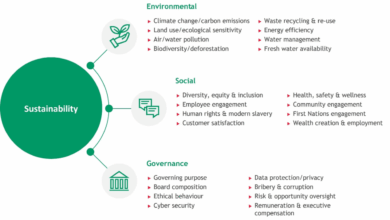
Environmental, Social, and Governance (ESG) investing has exploded from a niche ethical concern to a mainstream, multi-trillion-dollar force that is fundamentally reshaping capital allocation.
C.1. The Unstoppable Flow of Capital
The demand for ESG-focused investments is being driven by a powerful confluence of forces.
-
Generational Wealth Transfer: Millennials and Gen Z, who are set to inherit trillions, overwhelmingly prefer to invest in alignment with their values. They are demanding transparency and positive social and environmental impact.
-
Risk Mitigation: Wall Street has realized that poor governance, negligent environmental practices, and weak social policies are significant financial risks. A company with high carbon emissions faces regulatory and transition risks; a company with a toxic culture faces talent retention and reputational risks. ESG analysis is, therefore, seen as integral to fundamental risk assessment.
C.2. The “E” in ESG: The Climate Finance Opportunity
The transition to a low-carbon economy is the largest capital reallocation event in modern history, and Wall Street aims to be at the center of it.
-
Financing the Green Revolution: There is a massive need for capital to fund renewable energy projects, sustainable infrastructure, electric vehicle manufacturing, and carbon capture technologies. This creates immense opportunities for project finance, green bonds, and thematic investing.
-
Carbon as a Core Metric: Investment firms are increasingly modeling the cost of carbon into their valuations. A company’s carbon footprint and its strategy for the energy transition are becoming critical determinants of its cost of capital and its investment appeal.
C.3. The “S” and “G”: Scrutinizing Human and Corporate Capital
The social and governance pillars are gaining equal prominence.
-
Social Capital: Metrics around employee diversity, inclusion, fair wages, customer privacy, and data security are now being quantitatively assessed. A strong “S” profile is correlated with higher employee productivity, innovation, and customer loyalty.
-
Governance as a Predictor: Board structure, shareholder rights, executive compensation alignment, and ethical business practices are no longer afterthoughts. Weak governance is a red flag for potential scandals, mismanagement, and long-term underperformance.
C.4. The Greenwashing Backlash and the Push for Standardization
The rapid rise of ESG has led to a significant obsession: defining it. The lack of consistent, mandatory reporting standards has created a “wild west” where “greenwashing”—making misleading ESG claims—is a major concern. Wall Street is now obsessed with developing and implementing robust, standardized metrics to separate genuine sustainability from marketing hype.

D. Navigating the Macro Maze: The Fed, Inflation, and Geopolitics
In an interconnected global economy, macroeconomic forces dictate market sentiment and performance. The current environment is particularly complex, demanding constant vigilance.
D.1. The Federal Reserve as the Market’s Puppeteer
Every word uttered by the Fed Chair is dissected by armies of analysts. The shift from a decades-long regime of low interest rates and quantitative easing (QE) to a cycle of rate hikes and quantitative tightening (QT) has been the dominant market narrative.
-
The Inflation Conundrum: Wall Street is obsessed with predicting the path of inflation. Is it transitory or structural? The answer dictates the Fed’s policy response and, consequently, the valuation of every asset class, from growth stocks to bonds.
-
The “Higher for Longer” Mentality: The market is grappling with the possibility that the era of near-zero interest rates is over. This necessitates a complete re-evaluation of investment strategies that thrived on cheap money.
D.2. Geopolitical Risk as a Core Asset Class
The war in Ukraine, U.S.-China tensions, and supply chain disruptions have made geopolitical analysis a central function of every major investment firm.
-
Supply Chain Re-shoring and Friend-shoring: The obsession with secure and resilient supply chains is driving investment themes in manufacturing, logistics, and certain emerging markets aligned with Western interests.
-
The Weaponization of Finance: The use of sanctions and the dollar’s role as the global reserve currency have become active tools of foreign policy, creating both risks and opportunities that must be navigated.
Conclusion: The Synthesis of Man, Machine, and Morality
Wall Street’s new obsessions reveal a financial landscape in the midst of a profound metamorphosis. The archetypal financier is being replaced by a hybrid of data scientist, macro strategist, and ethical philosopher. Success now depends on the ability to harness the power of artificial intelligence without being blinded by its complexity, to unearth value in the opaque world of private markets while managing illiquidity risk, and to integrate the seemingly soft metrics of ESG into hard financial models.
The new obsession is not a single stock or sector, but a holistic, adaptive mindset. It is the relentless pursuit of an informational edge through technology, the patient cultivation of growth in private ecosystems, the strategic navigation of a world reshaped by climate and social change, and the agile management of unprecedented macroeconomic crosscurrents. The firms that can successfully synthesize these disparate forces—balancing the cold logic of the algorithm with the nuanced understanding of human and systemic risk—will be the titans of tomorrow’s Wall Street.
Category: Finance
Tags: Wall Street, investing trends, artificial intelligence, private equity, ESG investing, quantitative finance, algorithmic trading, market volatility, Fed policy, inflation, cryptocurrency, blockchain, passive investing, active management, data analytics