What the World’s Billionaires Genuinely Fear Today
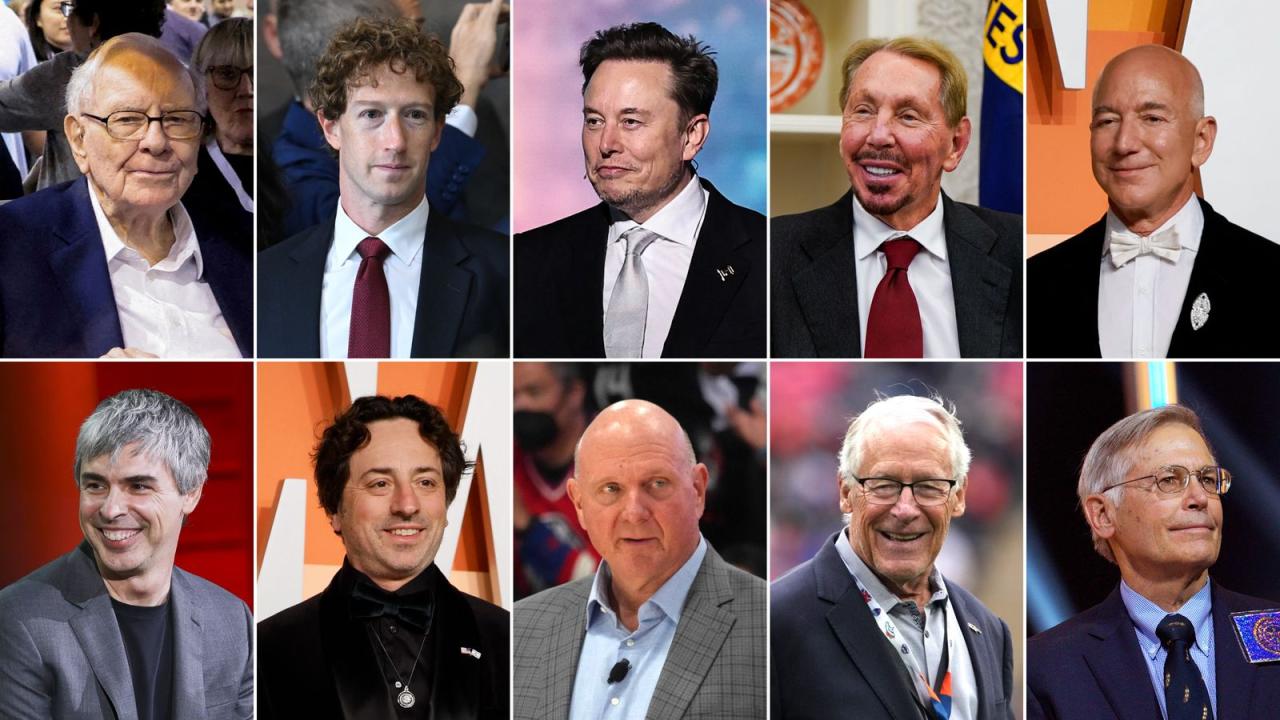
To the outside world, billionaires reside in a realm of unparalleled power and privilege, insulated from the mundane worries that preoccupy most of humanity. They possess the resources to bend markets, influence governments, and craft personal realities that defy convention. However, this perception of invincibility is a mirage. Behind the fortified gates and private security details lies a class of individuals grappling with a unique and potent set of fears. Their anxieties are not about making rent or affording healthcare; they are existential, systemic, and geopolitical threats that have the potential to dismantle empires built over generations. This in-depth exploration goes beyond the headlines to uncover the profound and complex fears that keep the world’s wealthiest individuals—and their extensive advisory teams—awake at night.
A. The Erosion of Legacy: Fears That Transcend a Single Lifetime
For many billionaires, their wealth is not merely a number in a bank account; it is a legacy, a life’s work meant to endure for centuries. The most profound fears are often those that threaten to undo this permanence.
A.1. The “Third-Generation Curse” and Familial Dissipation
A well-known proverb, “from shirtsleeves to shirtsleeves in three generations,” haunts wealthy families globally. It describes the pattern where the first generation builds the fortune, the second generation stewards it, and the third generation, raised in privilege and disconnected from the struggle, squanders it. This is not just a cliché; it’s a statistically observable phenomenon. The fear is that their children and grandchildren, devoid of the drive and discipline that created the wealth, will become entitled, make poor financial decisions, or fall prey to bad influences, leading to the gradual or rapid dissolution of the empire. This is less about the loss of money and more about the failure of their life’s work to instill lasting values.
A.2. Public Scrutiny and the “Cancel Culture” Conundrum
In the digital age, reputation is both a priceless asset and a fragile one. Billionaires fear the court of public opinion, where a single misstep, an ill-advised comment, or a past mistake can be amplified into a global firestorm. “Cancel culture” represents a direct threat to their social capital and, by extension, their business interests. A tarnished public image can lead to consumer boycotts, difficulty in attracting top talent, increased regulatory scrutiny, and a permanent stain on the family name. The fear is a loss of control over their own narrative, where their legacy is defined not by their philanthropy or innovations, but by a viral social media campaign.
A.3. Failed Succession Planning and Family Conflict
Closely tied to the third-generation curse is the tangible fear of a poorly executed succession plan. What happens when the patriarch or matriarch steps down or passes away? Vicious family battles over control of the company or trust funds can spill into public view, crippling business operations and destroying familial bonds. The absence of a clear, competent, and willing successor—whether within the family or from the executive team—can create a power vacuum, leading to strategic drift and a decline in the company’s value. The fear is that the very structure they built will collapse from within due to infighting and a lack of prepared leadership.
B. Systemic Threats: When the Global Order Falters
Billionaires have the most to lose when the complex systems that underpin global stability begin to wobble. Their wealth is often diversified across borders and asset classes, making them hyper-exposed to systemic risk.
B.1. Unprecedented Geopolitical Instability and Deglobalization
The post-Cold War era of globalization, which many billionaires leveraged to build their fortunes, is fracturing. The war in Ukraine, tensions between the U.S. and China, and the rise of nationalist and protectionist policies create a nightmare scenario for global business. Supply chains are disrupted, markets become segregated, and the rules-based international order weakens. For a billionaire with factories in Asia, customers in Europe, and investments in North America, a regional conflict or a trade war is not a distant news story; it is a direct assault on their operational and financial model. The fear is a retreat into competing economic blocs, rendering their globally integrated business obsolete or untenable.
B.2. The Looming Specter of a Sovereign Debt Crisis
Many billionaires hold significant portions of their wealth in what are traditionally considered “safe” assets, such as government bonds from stable Western nations. However, with sovereign debt levels at record highs across the developed world, a new fear is emerging: a loss of confidence in government bonds themselves. If a major economy were to face a debt crisis, it would trigger a financial cataclysm far worse than 2008. The “risk-free” asset would become risky, obliterating portfolios, collapsing currencies, and triggering a deflationary spiral. This is a fear of the entire financial system’s foundation turning to sand.
B.3. Regulatory Overreach and the Weaponization of Policy
The growing public and political sentiment against extreme wealth inequality has translated into tangible policy proposals. Billionaires increasingly fear becoming political targets. Proposals for significant wealth taxes, drastic increases in capital gains taxes, and the breakup of large monopolies are no longer fringe ideas but are entering mainstream political discourse. The fear is not just paying more taxes; it’s the fear of punitive, politically motivated regulations designed specifically to dismantle their concentrated wealth and power, fundamentally altering the rules of the game they have mastered.
B.4. Runaway Inflation and the Devaluation of Capital
While moderate inflation is a normal part of the economic cycle, the threat of sustained, high inflation strikes at the heart of wealth preservation. Billionaires’ wealth is largely stored in financial and real assets. Hyperinflation, or even persistently elevated inflation, acts as a silent tax, eroding the real value of their cash holdings and fixed-income investments. It creates economic volatility, distorts investment planning, and can lead to social unrest that threatens their physical assets and operations. The fear is that central banks will lose control, and the very currency their wealth is denominated in will cease to be a reliable store of value.

C. The Digital Battlefield: Invisible and Omnipresent Dangers
The modern billionaire’s life is deeply integrated with technology, creating a new frontier of vulnerabilities that are difficult to see and even harder to defend against.
C.1. Sophisticated Cyberattacks and Digital Extortion
Billionaires are prime targets for cybercriminals, hacktivists, and state-sponsored actors. The threats are multifaceted:
-
Corporate Espionage: Theft of intellectual property, merger plans, or proprietary algorithms can destroy a company’s competitive advantage.
-
Financial Theft: Direct attacks on bank accounts, brokerages, or cryptocurrency wallets.
-
Data Ransom: Hackers gaining access to sensitive personal, financial, or health data and holding it for ransom.
-
Reputational Sabotage: Leaking private emails or embarrassing communications to the public.
The fear is of an invisible, persistent enemy who can bypass millions of dollars in physical security from a remote location anywhere in the world, causing irreparable financial and reputational damage.
C.2. The AI Disruption Wave and Creative Destruction
Many billionaires made their fortunes by disrupting legacy industries. Now, they fear being on the receiving end. Artificial Intelligence (AI) is not just another technological trend; it is a foundational shift that has the potential to render entire business models obsolete. A billionaire in manufacturing fears autonomous factories making their human workforce redundant. A finance mogul fears AI-driven hedge funds that can outthink their best traders. A media baron fears AI-generated content. The fear is that their deep industry expertise and capital will become worthless overnight in the face of a technological paradigm they cannot control or fully comprehend.
C.3. The Loss of Privacy in a Hyper-Connected World
For the ultra-wealthy, privacy is a cornerstone of security and peace of mind. The digital era has made it nearly extinct. From data brokers selling their personal information to journalists using satellite imagery to scope out their estates, the ability to live a private life is vanishing. The fear is one of perpetual exposure—that their movements, their associations, and their personal lives are constantly being monitored, tracked, and potentially weaponized against them by malicious actors or an insatiably curious public.
D. Personal and Physical Security: The Price of Prominence
With great wealth comes a great and constant awareness of personal vulnerability.
D.1. Targeted Kidnapping and Extortion Plots
For billionaires and their families, kidnapping is not an abstract crime but a credible and persistent threat. Family members, particularly children, are seen as high-value targets for sophisticated criminal organizations. This necessitates a life surrounded by security details, armored vehicles, and secure residences, which itself can feel like a gilded cage. The fear is a constant, low-grade hum of anxiety about the safety of loved ones and the nightmare scenario of a successful abduction.
D.2. The Threat of Radical Political and Social Upheaval
History has shown that periods of extreme inequality can lead to social unrest, revolution, and even expropriation. While a full-scale revolution may seem remote in developed nations, the fear of widespread civil disorder is very real. The protests, riots, and “bossnapping” incidents that occasionally flare up are stark reminders that public sentiment can turn violently against the perceived “elite.” The fear is of a populist or anarchic movement that directly targets their properties, their businesses, and their personal safety, overwhelming their private security forces.
D.3. The Unique Vulnerability of Global Travel
While they travel by private jet and yacht, these assets also make them highly visible and predictable targets. An aircraft can be tracked, a yacht’s location is public record, and international travel often involves moving through less-secure environments. The fear is of an attack while in transit, in a foreign country with unstable governance, or while residing in a high-profile, known location like a luxury hotel.
E. The Intangible Burdens: The Psychological Weight of Extreme Wealth
Finally, there are the internal, psychological fears that are seldom discussed but are deeply felt.
E.1. The Crisis of Purpose and Existential Vacuum
After achieving a level of wealth where every material desire is instantly fulfillable, a profound question emerges: “What now?” The driving ambition that fueled their rise can evaporate, leaving a void. This can lead to a loss of direction, depression, and a sense of isolation. The fear is that the ultimate prize—unimaginable success—is ultimately empty, and that their life lacks a deeper meaning beyond the accumulation of capital.
E.2. The Pervasive Distrust of Motives
Billionaires often struggle to form genuine personal relationships. They can never be certain if people are interested in them for who they are or for what they have. This breeds a deep-seated paranoia and loneliness. The fear is that they are surrounded by a court of sycophants and advisors, but are utterly alone, unable to trust the affection or counsel of anyone they meet.
E.3. The Moral and Ethical Dilemmas of Influence
With great power comes great responsibility, and many billionaires wrestle with how to use their influence. Should they intervene in a geopolitical crisis? Should they fund a controversial scientific experiment? Should they use their wealth to sway an election? The fear is of making a catastrophic miscalculation with their power, inadvertently causing harm on a massive scale, and being judged harshly by history for their choices.
Conclusion: A Gilded Cage of Contingencies
The fears of the world’s billionaires paint a picture of a life that is powerful yet precarious, luxurious yet often locked down. Their anxieties are a reflection of the immense responsibility and target that their wealth creates. It is a state of being where one must constantly guard against the dissipation of legacy, the instability of global systems, the invisibility of digital threats, and the fragility of personal security. Understanding these fears is not about eliciting sympathy, but about gaining a more nuanced and complete picture of the dynamics that shape the highest echelons of power and influence in our world. It reveals that the gilded cage, for all its splendor, is still very much a cage.
Category: Finance
Tags: billionaires, wealth preservation, economic collapse, geopolitical risk, cybersecurity, generational wealth, market crash, inflation, high-net-worth, family office, investment strategies, philanthropy, succession planning