
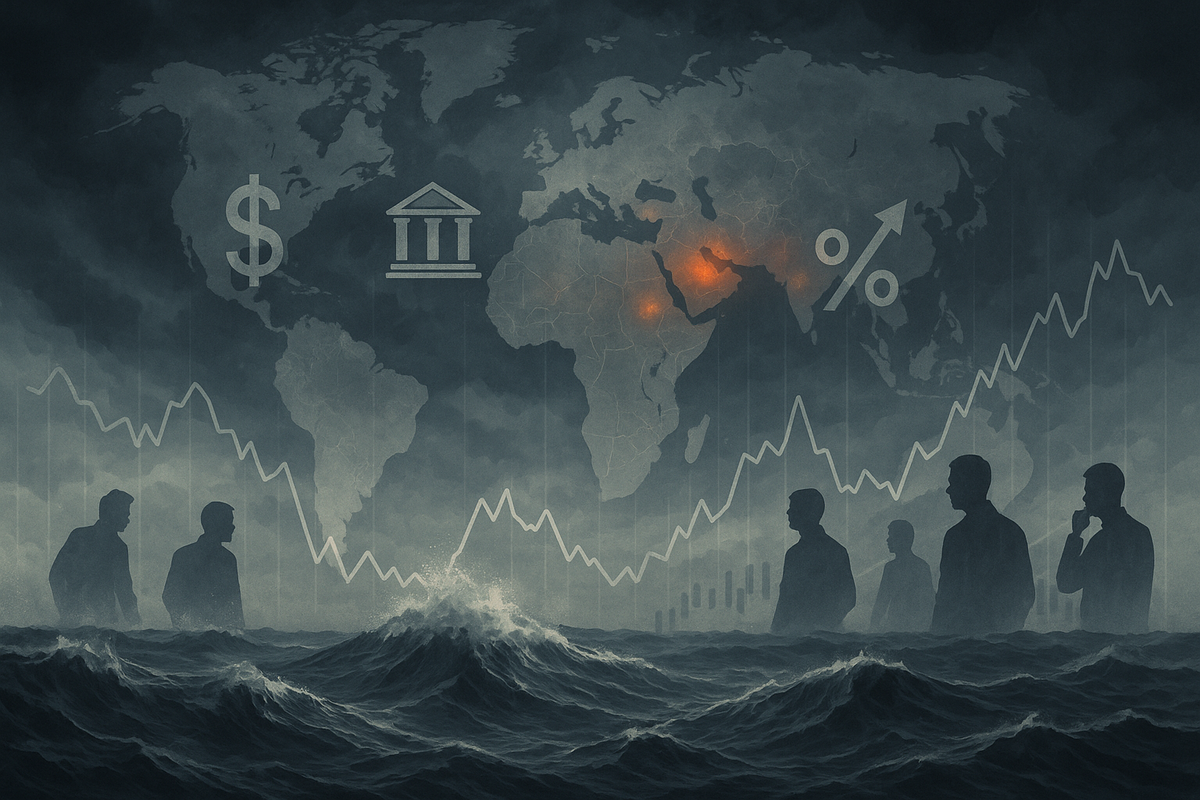
The era of predictable globalization that defined the late 20th and early 21st centuries has conclusively ended. We have entered a period of profound structural instability—a Geopolitical Storm characterized by escalating great power competition, economic fragmentation, and persistent low-grade conflicts. For business leaders, this is no longer a distant concern for policy experts but a clear and present danger to supply chains, market access, capital flows, and strategic planning. The assumption that the world is steadily moving toward greater integration and cooperation has been shattered, replaced by a new reality of volatility and divergence.
Navigating this storm requires a fundamental shift in mindset. Geopolitical intelligence can no longer be a siloed function within a corporation; it must become a core competency, integrated into every facet of strategy, from the C-suite to the supply chain manager. This in-depth guide will dissect the primary drivers of this new instability, analyze its direct impact on global business operations, and provide a robust, actionable framework for building organizational resilience and turning geopolitical risk into a source of competitive advantage.
A. The Perfect Storm: Key Drivers of Global Instability
The current geopolitical climate is not the result of a single event, but a convergence of several powerful, self-reinforcing trends.
A. The Return of Great Power Competition: The post-Cold War “unipolar moment” is over. We have entered a multipolar world where the United States, China, and Russia, along with regional powers, are actively competing for economic, technological, and military influence. This competition is not confined to diplomatic channels; it is being fought through trade wars, sanctions, export controls, and battles for control over critical technologies like semiconductors and artificial intelligence.
B. Economic Fragmentation and “Slowbalization”: The model of hyper-efficient, just-in-time global supply chains is being reevaluated. Nations are prioritizing economic security and resilience over pure efficiency, leading to a phenomenon often called “slowbalization” or “friend-shoring.”
-
Key Manifestations: The imposition of tariffs and trade barriers, incentives for domestic production of critical goods (like semiconductors and pharmaceuticals), and the creation of competing economic blocs (e.g., the U.S.-led Indo-Pacific Economic Framework vs. China’s Belt and Road Initiative).
C. The Weaponization of Interdependence: The global systems that were once seen as neutral conduits for commerce—finance, energy, and information—are now being used as instruments of state power.
-
Examples: The use of the U.S. dollar-dominated financial system to impose crippling sanctions on nations like Russia. Europe’s past dependence on Russian natural gas becoming a point of strategic vulnerability. Control over undersea data cables becoming a national security priority.
D. Climate Change as a “Threat Multiplier”: Climate change is not just an environmental issue; it is a potent geopolitical destabilizer. It exacerbates resource scarcity, triggers mass migration, and creates new flashpoints, particularly in the Arctic (as melting ice opens new shipping lanes and resource extraction sites) and in water-stressed regions like the Middle East and South Asia.
E. The Erosion of the International Rules-Based Order: Institutions like the United Nations and the World Trade Organization, which were designed to mediate disputes and set global norms, are increasingly being bypassed or undermined by powerful states acting unilaterally, creating a more unpredictable and anarchic international environment.
B. The Corporate Impact: How the Storm Hits Your Business
These macro-trends translate into direct, tangible threats and disruptions for companies operating internationally.
A. Supply Chain Shockwaves and Disruption:
Modern supply chains are incredibly complex and vulnerable to geopolitical events far from corporate headquarters.
-
Scenario: A flare-up in the South China Sea, a critical global shipping lane, could halt trillions of dollars in trade. A sanctions regime on a particular region can instantly make key suppliers or logistics hubs inaccessible. Companies must map their supply chains not just for cost, but for geopolitical concentration risk.
B. Regulatory and Sanctions Whiplash:
The regulatory environment is becoming more volatile and politically charged.
-
Scenario: A company can find its operations suddenly non-compliant due to new export controls on advanced technology, or it could be caught in the crossfire of sanctions, unable to do business with a long-standing partner. The legal and reputational risks of non-compliance are severe.
C. Market Access Volatility:
Markets that were once considered stable and open can become closed or hostile overnight.
-
Scenario: Consumer boycotts fueled by nationalist sentiment can devastate a brand’s sales in a major market. A foreign government may suddenly impose arbitrary regulatory hurdles or freeze assets for companies from a specific country, as has been seen in various East-West confrontations.
D. Technology and Data Sovereignty Battles:
The global internet is splintering into a “splinternet,” with different nations enforcing their own data governance rules.
-
Scenario: The European Union’s GDPR, China’s Great Firewall, and the U.S.’s CLOUD Act create a complex, often contradictory, web of regulations governing how data can be stored, processed, and transferred across borders. Non-compliance can result in massive fines and operational paralysis.
E. Talent Mobility and Expatriate Risk:
Political instability can directly threaten the safety of employees stationed abroad. Furthermore, immigration policies are becoming more restrictive, making it harder to deploy key talent to where it is needed most.

C. The Resilience Framework: A Strategic Blueprint for Navigation
Surviving and thriving in this environment requires a proactive, structured approach. Reactive crisis management is no longer sufficient.
A. Establish a Geopolitical Intelligence Function:
This is the foundational step. Companies must have a dedicated process for monitoring and analyzing global events.
-
Actionable Steps:
-
Move Beyond News Headlines: Subscribe to specialized intelligence feeds and engage with geopolitical risk consultants who can provide forward-looking analysis, not just report on past events.
-
Create a Cross-Functional Risk Council: This should include leaders from supply chain, legal, finance, security, and communications. This council should meet regularly to assess threats and coordinate responses.
-
Develop Scenario Planning Capabilities: Don’t try to predict the future. Instead, develop 3-4 plausible scenarios for your key markets (e.g., “Deepening Decoupling,” “Stable Rivalry,” “Detente”) and stress-test your strategies against each one.
-
B. Build Supply Chain Resilience Through Redundancy and Regionalization:
The goal is to move from fragile, lean supply chains to agile, resilient networks.
-
Actionable Steps:
-
Conduct a “China +1” or Multi-Sourcing Strategy: Identify single points of failure and diversify suppliers across different geographic regions, even if it comes at a slightly higher cost.
-
Increase Inventory Buffers: For critical components, the cost of holding extra inventory is now a justifiable insurance policy against disruption.
-
Invest in Supply Chain Visibility Technology: Use AI and IoT sensors to track shipments in real-time, allowing for rapid rerouting in case of a blockade or closure.
-
C. Fortify Your Regulatory and Compliance Defenses:
In a world of weaponized regulation, compliance is a strategic function.
-
Actionable Steps:
-
Conduct Enhanced Due Diligence: Scrutinize partners, customers, and suppliers not just for financial health but for their political connections and exposure to sanctioned entities.
-
Implement Robust Sanctions Screening Software: Automate the process of checking transactions and partners against constantly updated global sanctions lists.
-
Develop a “Worst-Case” Data Governance Strategy: Plan for the possibility of being forced to store and process data entirely within a specific country or region. This may involve investing in local data centers or cloud infrastructure.
-
D. Cultivate Local Agility and Social License:
A centralized, one-size-fits-all global strategy is a liability. Companies must empower local leadership.
-
Actionable Steps:
-
Decentralize Decision-Making: Give country managers the authority to adapt strategies quickly to local political conditions.
-
Invest in Local Stakeholder Engagement: Build strong relationships with local communities, governments, and media. A company seen as a valuable local partner is less likely to be targeted during periods of tension.
-
Localize Your Value Chain: Where possible, source materials, hire talent, and manufacture within the region you are selling to. This not only mitigates trade risk but also builds goodwill.
-
E. Stress-Test Your Financial Strategy:
Ensure your capital structure can withstand sudden shocks.
-
Actionable Steps:
-
Diversify Funding Sources: Avoid over-reliance on capital markets or banks from a single country.
-
Hedge Currency and Commodity Exposure: Use financial instruments to protect against wild swings in exchange rates and key input costs driven by geopolitical events.
-
Maintain a War Chest: Ensure access to sufficient liquid capital to weather a prolonged period of disruption.
-
D. Turning Risk into Advantage: The Opportunistic Mindset
The most sophisticated companies do not just see geopolitical risk; they see opportunity.
A. First-Mover Advantage in New Markets: As great powers create competing economic spheres, new markets and alliances will emerge. Companies that can navigate this complexity early can establish dominant positions.
B. Leadership in Resilient Technologies: There is growing demand for products and services that enhance resilience—from cybersecurity and supply chain visibility software to alternative energy systems and modular manufacturing. The storm creates its own market.
C. The Trust Premium: In a volatile world, customers and partners will flock to brands that are perceived as stable, reliable, and ethically grounded. A demonstrable commitment to robust governance and geopolitical savvy can become a powerful brand differentiator.
Conclusion: The New Core Competency
The geopolitical storm is not a temporary squall; it is the new climate. The businesses that will not only survive but excel in the coming decades will be those that treat geopolitical intelligence with the same rigor as financial analysis and market research. They will have moved from a mindset of passive risk management to one of active resilience building.
Navigating this storm requires leadership that is literate in history, humble in the face of complexity, and agile in execution. By embedding geopolitical strategy into the DNA of your organization, you transform a source of vulnerability into a durable competitive shield, ensuring that your enterprise can withstand the winds of change and find a path to calm waters and prosperous new horizons.
Tags: geopolitical risk, global business strategy, supply chain resilience, economic security, international trade, risk management, corporate strategy, sanctions compliance, market volatility, political instability, business continuity, strategic planning, global economy, trade wars
Category: Business & Strategy